Revolutionizing Fintech: The Role of AI in Financial Operations

In the fast-paced fintech world, businesses are embracing AI to revolutionize financial operations and optimize efficiency. As industries evolve, managing processes like payment reconciliation, financial reconciliation, and handling vast payment data has become more complex. This is where AI steps in, transforming these traditionally manual tasks into streamlined, automated workflows.
1. Automating Payment Reconciliation
One of the key challenges in financial operations has been reconciling payments across diverse channels. Automated payment reconciliation powered by AI is changing the game. By intelligently matching transactions, identifying discrepancies, and resolving mismatches in real time, businesses can eliminate manual errors and speed up their reconciliation cycles.
This automation not only saves time but also enhances the accuracy of financial data, providing businesses with deeper insights for decision-making.
2. Transforming Financial Reconciliation Processes
AI has made financial reconciliation more dynamic by integrating advanced algorithms capable of processing high-volume transactions with precision. Whether reconciling bank statements or cross-verifying complex ledgers, AI-powered systems can adapt to varying business requirements.
This adaptability ensures that businesses maintain compliance, improve reporting accuracy, and minimize resource allocation for mundane tasks.
3. Streamlining Payment Reconciliation Across Channels
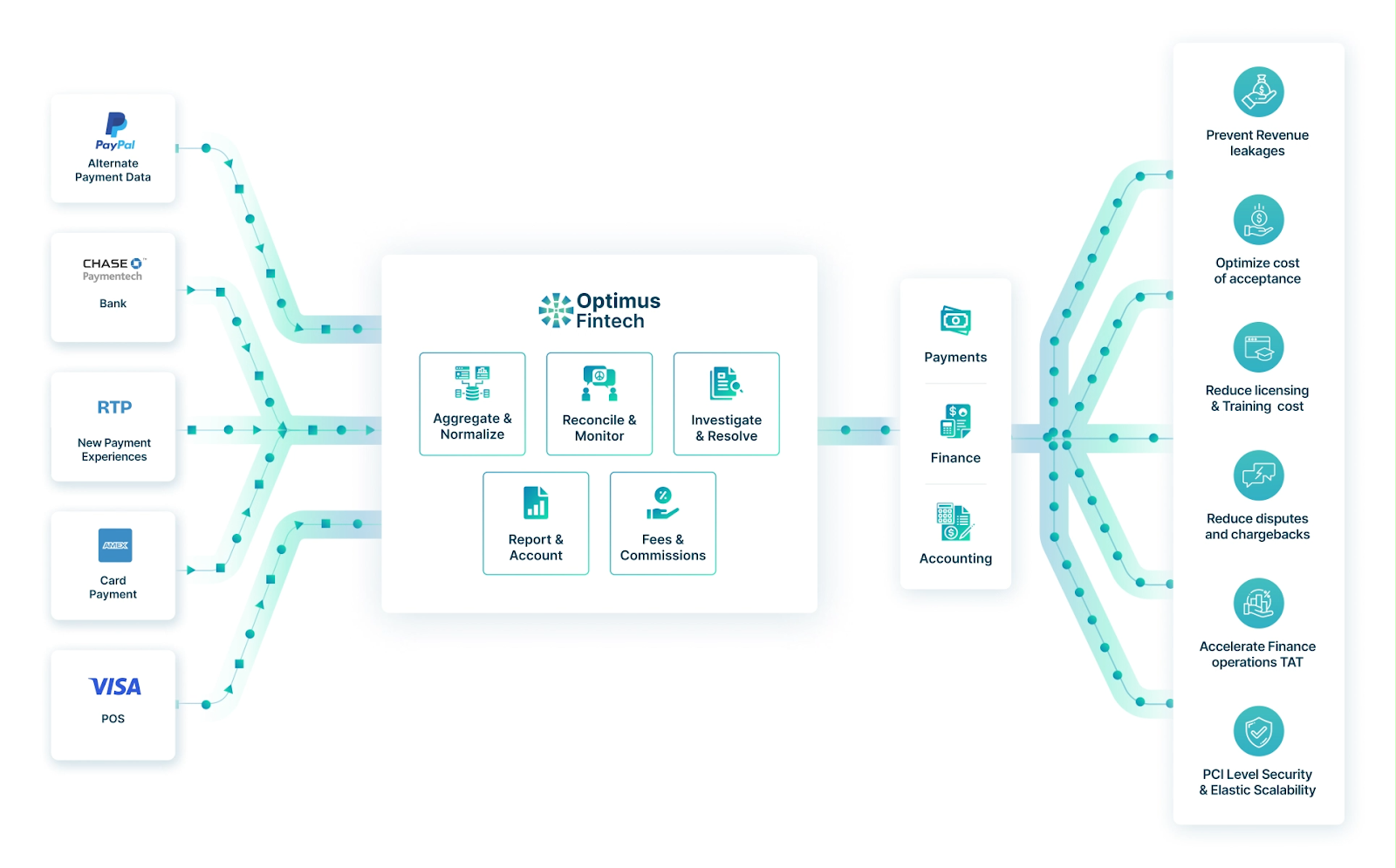
The growing adoption of multiple payment channels—ranging from credit cards to digital wallets—has increased the complexity of financial operations. AI simplifies payment reconciliation by consolidating data from all these channels into a unified system.
This consolidation allows fintech companies to detect irregularities instantly, ensuring smooth operations and building trust with customers and stakeholders alike.
4. Enhancing Operational Agility with AI
In today’s competitive fintech environment, operational agility is non-negotiable. AI helps organizations address this need by integrating tools that work seamlessly with existing financial systems. Whether managing real-time payment tracking or automating dispute resolutions, AI empowers teams to focus on growth-oriented tasks while leaving repetitive processes to technology.
This agility ensures that businesses can adapt to rapid changes and maintain their edge in a highly competitive market.
5. Reducing Errors and Boosting Transparency
Manual financial processes are prone to errors, which can impact everything from cash flow management to compliance. By automating financial reconciliation, businesses achieve higher accuracy and transparency in their operations.
With AI offering real-time updates and detailed reports, decision-makers can gain better visibility into their financial performance, enabling more informed strategies.
6. Driving Innovation in Payment Reconciliation
As fintech companies look to expand globally, managing transactions across different currencies and jurisdictions is crucial. AI-driven automated payment reconciliation systems handle these complexities effortlessly, providing consistent results regardless of scale.
This innovation allows businesses to operate more efficiently in international markets, strengthening their global presence and improving customer satisfaction.
7. Building a Future-Ready Financial Ecosystem
The integration of AI into financial operations is more than a trend—it’s the foundation for a future-ready fintech ecosystem. By adopting payment reconciliation and financial reconciliation solutions powered by AI, businesses can streamline operations, reduce costs, and enhance customer trust.
Organizations that leverage these advancements position themselves as leaders in innovation, setting a new standard for the industry.

Comments
Post a Comment